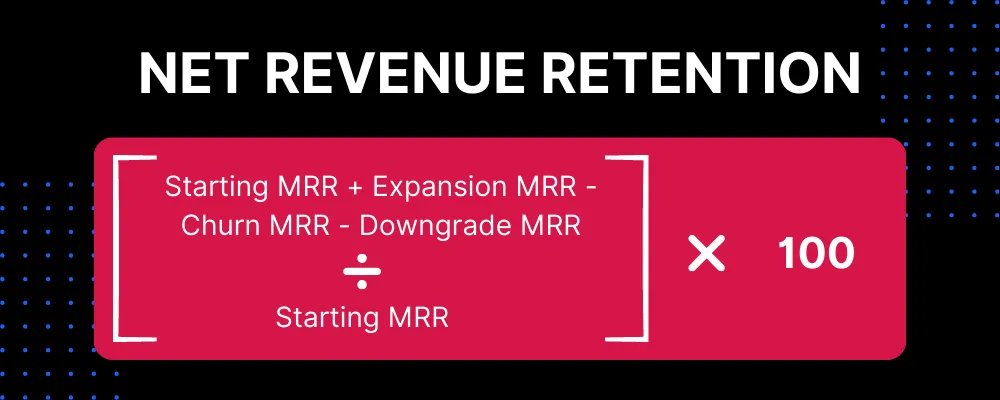
Net Revenue Retention (NRR) is a critical metric for businesses focused on sustainable growth, especially those operating in subscription-based or recurring revenue models. It reflects a company’s ability to retain and expand revenue from its existing customer base by factoring in upsells, cross-sells, downgrades, and churn. Monitoring and improving NRR requires precise tracking, real-time data, and customer insights—capabilities that modern Customer Relationship Management (CRM) systems are uniquely equipped to deliver.
This article explores how using CRM technology to monitor Net Revenue Retention can empower businesses to identify revenue risks, seize growth opportunities, and optimize customer lifetime value.
What is Net Revenue Retention and Why Does It Matter?
Net Revenue Retention measures the percentage of recurring revenue retained from existing customers over a defined period, including expansions and contractions. An NRR greater than 100% means that revenue growth from existing customers exceeds losses from churn and downgrades—signaling a healthy, scalable business.
NRR is crucial because:
- It focuses on growth within your current customer base.
- It reveals customer satisfaction and product value.
- It helps forecast long-term revenue and business health.
- It guides strategic decisions on customer success, sales, and marketing.
However, accurately calculating and improving NRR requires integrated data from sales, customer success, and finance teams—which is where CRM systems come in.
How CRM Facilitates Accurate Monitoring of Net Revenue Retention
1. Centralized Customer and Revenue Data
A CRM system aggregates critical information such as contract values, subscription terms, billing history, and engagement metrics. This comprehensive dataset allows companies to calculate NRR precisely by tracking revenue fluctuations at the individual account level.
2. Tracking Customer Lifecycle and Revenue Movements
CRMs record lifecycle stages—new, active, churned—and changes in customer plans or product usage. This visibility enables:
- Identification of expansion revenue (upsells/cross-sells)
- Detection of contraction or downgrades
- Early warning of at-risk customers before churn occurs
3. Automated Reporting and Real-Time Dashboards
Modern CRMs offer dashboards and custom reports that display NRR trends, segmented by customer cohort, region, product line, or sales rep. Automation eliminates manual data compilation and enables real-time monitoring, empowering proactive management.
4. Integration with Billing and Finance Systems
By connecting CRM data with billing platforms, companies maintain synchronized financial records and customer information, ensuring NRR calculations are accurate and up-to-date.
5. Enabling Proactive Customer Success Strategies
CRM-driven insights highlight customers showing signs of churn risk or revenue contraction. Customer success teams can intervene early with tailored retention campaigns, service improvements, or upsell opportunities to maximize revenue retention.
Best Practices for Using CRM to Improve Net Revenue Retention
1. Define Clear Metrics and Segmentation
Segment customers by value, industry, tenure, or product to understand NRR dynamics across different groups. Define KPIs and align them with CRM reporting.
2. Implement Automated Alerts and Triggers
Set up CRM notifications for revenue changes, contract renewals, or engagement drops, enabling swift action.
3. Align Sales, Customer Success, and Finance
Ensure cross-functional teams share CRM insights and collaborate on retention strategies and revenue growth initiatives.
4. Leverage CRM Analytics and AI
Use predictive analytics to identify upsell potential and churn risk, optimizing resource allocation.
5. Continuously Review and Refine Strategies
Regularly analyze CRM-generated reports to measure the impact of retention efforts and adjust accordingly.
Real-World Impact: CRM and NRR in Action
- SaaS Companies: Use CRM to track subscription upgrades and churn, enabling targeted upsell campaigns that drive NRR above 120%.
- Financial Services: Monitor client portfolio growth and attrition through CRM, aligning customer success teams to improve retention.
- Healthcare Providers: Leverage CRM to identify patient retention trends and tailor engagement programs, maximizing revenue continuity.
Choosing the Right CRM for NRR Monitoring
Effective NRR monitoring demands CRM platforms that offer:
- Deep integration with billing and finance systems
- Advanced analytics and customizable reporting
- Real-time dashboards and alerting capabilities
- Scalable architecture to handle growing data volumes
- User-friendly interfaces for cross-team adoption
Popular CRM solutions such as Salesforce, HubSpot, Microsoft Dynamics 365, and Zoho CRM provide these features tailored to revenue retention needs.
Conclusion: Harness CRM to Drive Superior Net Revenue Retention
Net Revenue Retention is a powerful indicator of business health and growth potential, especially in subscription-driven markets. Using CRM systems to monitor and manage NRR equips companies with the insights, automation, and cross-team collaboration needed to reduce churn, increase upsell, and maximize customer value.