In the rapidly evolving business landscape, strategic customer planning is critical for companies aiming to sustain competitive advantage and foster long-term growth. At the heart of this process lies the need for comprehensive insights into customer behavior, preferences, and lifecycle stages—insights that are best delivered by an advanced Customer Relationship Management (CRM) system.
CRM plays a pivotal role in enabling organizations to develop, execute, and refine customer-centric strategies that drive loyalty, increase revenue, and optimize resource allocation. This article explores the multifaceted role of CRM in strategic customer planning and how businesses can harness its full potential to achieve impactful outcomes.
Understanding Strategic Customer Planning
Strategic customer planning is a structured approach to managing customer relationships through targeted segmentation, personalized engagement, and proactive lifecycle management. It involves:
- Analyzing customer data to identify high-value segments
- Developing tailored marketing, sales, and service initiatives
- Aligning organizational resources to customer needs and opportunities
- Monitoring performance and adapting strategies dynamically
The goal is to maximize customer lifetime value and foster long-term partnerships that benefit both the customer and the business.
How CRM Empowers Strategic Customer Planning
1. Comprehensive Customer Data Aggregation
A robust CRM system centralizes disparate customer data—purchase history, communication records, support tickets, social media interactions, and more—into a single, unified customer profile. This holistic view is the foundation for informed strategic planning.
2. Advanced Segmentation and Targeting
CRM enables granular segmentation based on demographics, buying behavior, engagement level, and predictive analytics. This empowers businesses to:
- Identify priority customer groups
- Customize marketing campaigns and sales approaches
- Allocate resources more effectively to high-potential segments
3. Predictive Analytics and Customer Insights
Modern CRMs incorporate AI-driven analytics to forecast customer behavior such as churn risk, upsell potential, and product preferences. These insights guide strategic decisions to proactively address customer needs.
4. Customer Journey Mapping and Lifecycle Management
CRM platforms facilitate detailed tracking of the customer journey—from acquisition through retention and advocacy. This enables strategic interventions at key touchpoints to optimize conversion rates and reduce churn.
5. Collaboration Across Departments
CRM acts as a centralized platform for sales, marketing, and customer service teams to share information, align goals, and coordinate customer-centric initiatives. This alignment is essential for executing cohesive strategies.
6. Real-Time Performance Monitoring
With CRM dashboards and reporting tools, businesses can continuously monitor the effectiveness of their strategic customer plans and quickly adjust tactics based on real-time data.
Implementing CRM in Strategic Customer Planning: Best Practices
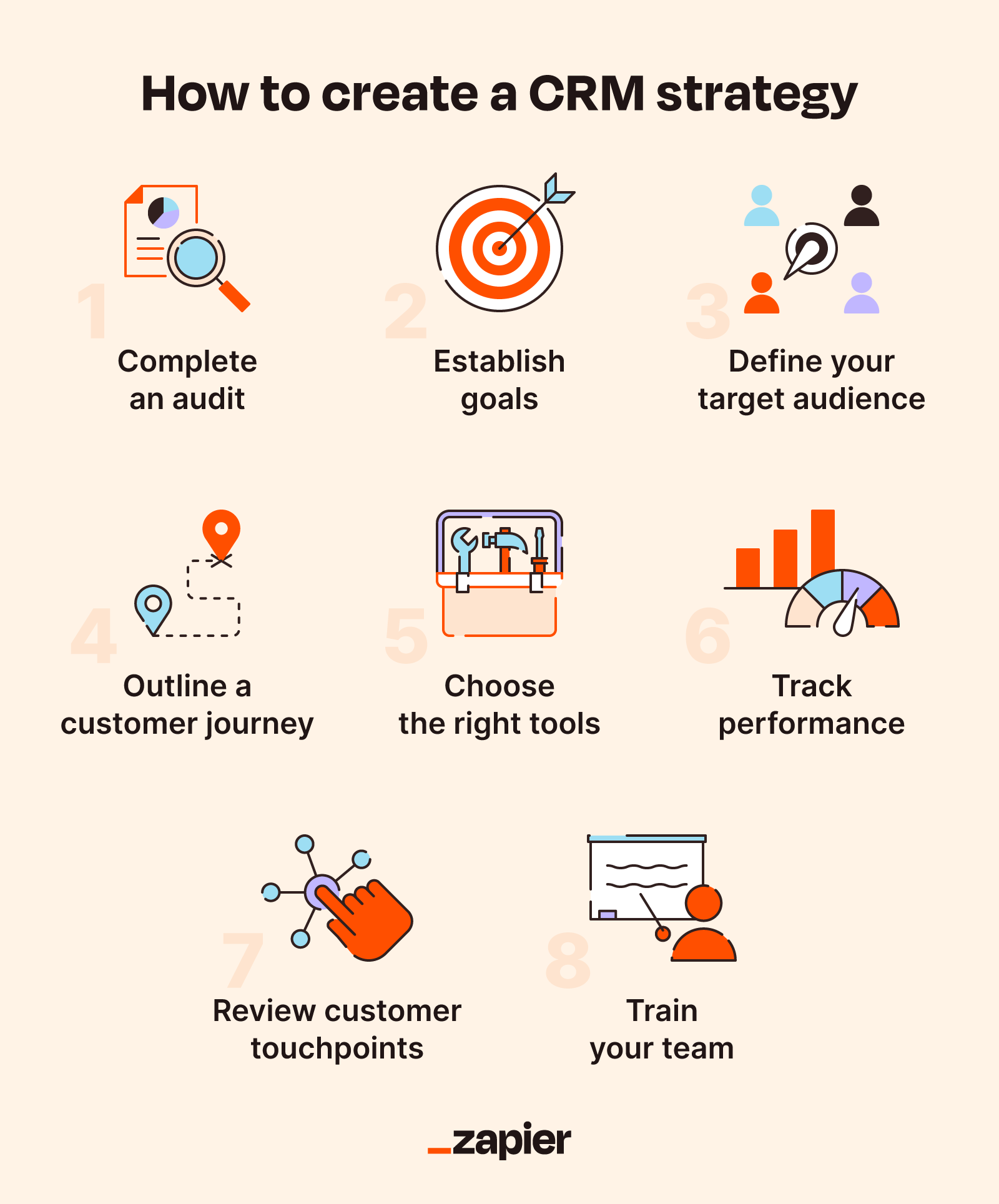
Step 1: Define Clear Customer-Centric Objectives
Set measurable goals such as increasing customer retention by X%, boosting average order value, or expanding market share in a key segment.
Step 2: Leverage Data to Identify Key Segments
Use CRM analytics to uncover profitable customer groups and understand their unique characteristics and needs.
Step 3: Design Tailored Engagement Strategies
Create personalized marketing messages, customized sales approaches, and targeted service programs using CRM segmentation.
Step 4: Integrate Customer Feedback
Incorporate feedback and sentiment data captured in the CRM to refine products, services, and engagement methods.
Step 5: Foster Cross-Functional Collaboration
Ensure all relevant teams utilize the CRM system consistently to maintain alignment and share customer insights.
Step 6: Continuously Analyze and Optimize
Regularly review CRM reports and KPIs to identify areas for improvement and iterate your strategic plans accordingly.
Benefits of Using CRM for Strategic Customer Planning
| Benefit | Impact |
|---|---|
| Data-Driven Decision Making | Reduces guesswork and supports evidence-based strategies |
| Enhanced Customer Segmentation | Enables precision targeting and resource optimization |
| Improved Customer Experience | Personalized engagement drives loyalty and satisfaction |
| Increased Revenue Opportunities | Identifies upsell, cross-sell, and retention possibilities |
| Stronger Organizational Alignment | Facilitates unified customer strategies across departments |
| Agile Strategy Adaptation | Enables rapid response to market changes and customer trends |
Industry Applications of CRM in Strategic Customer Planning
- Retail: Segmenting customers by purchase frequency and preferences to tailor promotions and loyalty programs.
- Financial Services: Predicting churn risk and proactively offering personalized financial products.
- Healthcare: Managing patient engagement and care pathways based on health data and appointment history.
- Technology: Tracking product usage and customer feedback to guide feature development and renewal campaigns.
- Manufacturing: Aligning sales and service strategies with customer demand and product lifecycle stages.
Choosing the Right CRM for Strategic Customer Planning
When selecting a CRM to support strategic customer planning, look for:
- Comprehensive data integration capabilities
- Advanced analytics and AI features
- Robust segmentation and campaign management tools
- User-friendly interface promoting cross-team adoption
- Real-time reporting and dashboard customization
- Scalability to grow with your business needs
Leading CRM platforms such as Salesforce, Microsoft Dynamics 365, HubSpot, and Zoho CRM offer these capabilities tailored for strategic customer planning.
Conclusion: CRM as the Cornerstone of Strategic Customer Planning
In an era where customer expectations are constantly rising, businesses must adopt a proactive, data-driven approach to managing relationships. CRM systems provide the essential technology backbone to gather insights, align teams, and execute effective customer strategies.
By integrating CRM into strategic customer planning, organizations can unlock deeper customer understanding, drive targeted engagement, and ultimately achieve sustainable growth. The right CRM empowers you not just to respond to customers—but to anticipate their needs and build lasting loyalty.